 Save
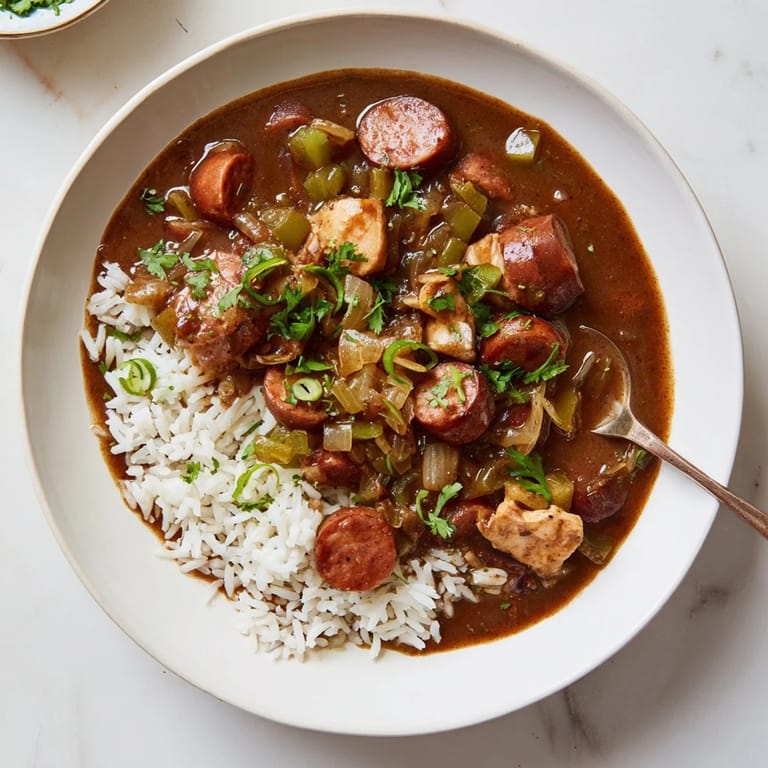
Save The first time I attempted gumbo, I stood over that roux for twenty-five minutes, arm aching, wondering if I'd ruined it. My roommate's grandmother had called from Baton Rouge to walk me through it, describing exactly what chocolate-brown should look like. When that nutty fragrance finally hit the kitchen, something clicked. Now every time I make it, I'm transported back to that tiny apartment kitchen.
Last winter during a snowstorm, I made a triple batch for neighbors who'd never had Louisiana food before. Watching them discover the complex layers of flavor, that first cautious bite followed by immediate reaching for seconds, reminded me why gumbo matters. It's not just dinner, it's a conversation starter, a memory maker, something that demands you slow down and stay awhile.
Ingredients
- Andouille sausage: This smoked pork sausage brings the deep, smoky backbone that defines authentic gumbo flavor
- Boneless chicken thighs: Chicken thighs stay tender through long simmering and release rich flavor into the broth
- Medium shrimp: Add these near the end so they stay succulent and dont turn rubbery from overcooking
- The holy trinity: Onion, bell pepper, and celery form the aromatic foundation of Creole cooking
- Garlic: Four cloves might seem like a lot but garlic mellows beautifully in the long simmer
- Tomatoes: Fresh diced tomatoes add brightness though canned work perfectly when tomatoes are out of season
- Vegetable oil and flour: This roux is the heart of gumbo, taking time but creating unparalleled depth
- Chicken or seafood stock: Homemade stock elevates everything but a good quality store bought version still delivers excellent results
- Bay leaves and thyme: These herbs provide that classic aromatic backdrop
- Smoked paprika and cayenne: Smoked paprika adds complexity while cayenne brings the adjustable heat
- Worcestershire sauce: This unexpected ingredient adds umami and subtle tang
- Hot sauce: Keep it on the table so everyone can customize their spice level
- Cooked white rice: Fluffy rice is the perfect canvas to soak up all that flavorful broth
Tired of Takeout? 🥡
Get 10 meals you can make faster than delivery arrives. Seriously.
One email. No spam. Unsubscribe anytime.
Instructions
- Mise en place everything first:
- Chop all vegetables, slice the sausage, chunk the chicken, and peel the shrimp before you turn on the stove
- Make the roux:
- Heat oil in your heavy pot over medium, whisk in flour gradually, then stir constantly without distraction for 15 to 20 minutes until it reaches deep chocolate brown
- Add the holy trinity:
- Toss in onion, bell pepper, and celery once the roux is ready, cooking about five minutes until the vegetables soften
- Bloom the garlic:
- Stir in minced garlic for just one minute until fragrant but not browned
- Brown the proteins:
- Add sausage and chicken pieces, sautéing five minutes until they develop some color
- Build the flavor base:
- Stir in tomatoes, bay leaves, thyme, smoked paprika, cayenne, salt, and black pepper
- Simmer the gumbo:
- Pour in stock gradually while stirring, bring to boil, then reduce heat and simmer uncovered 45 minutes
- Add the shrimp:
- Drop in shrimp during the final ten minutes of simmering, cooking just until they turn pink and opaque
- Finish with seasonings:
- Stir in Worcestershire and hot sauce, taste and adjust salt or pepper as needed
- Optional filé powder:
- Remove from heat and stir in half to one teaspoon filé powder if you want authentic thickening and earthy flavor
- Serve it up:
- Ladle hot gumbo over fluffy rice in bowls, scatter scallions and parsley on top
 Save
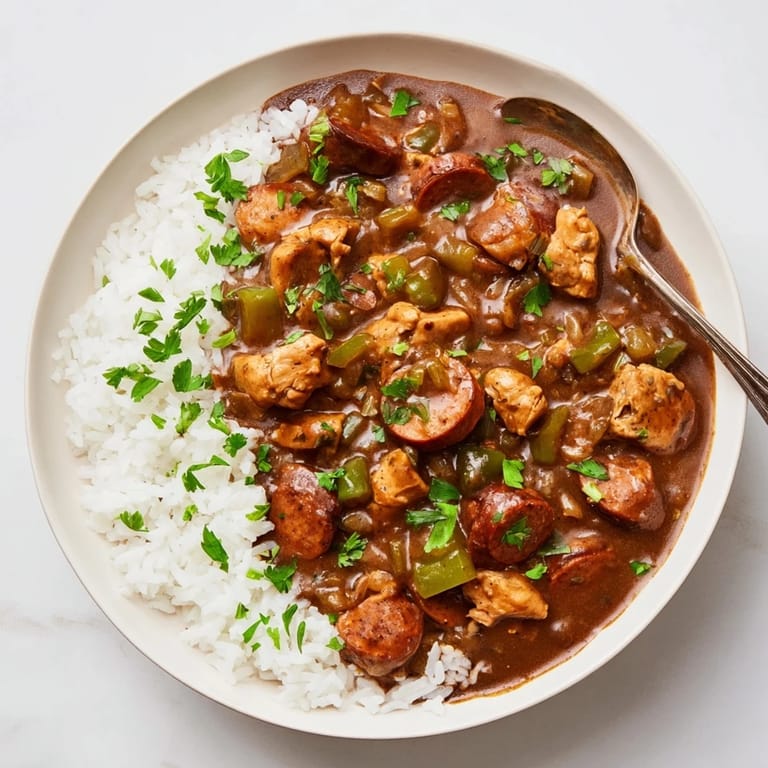
Save My friend Sarah still talks about the gumbo I made for her birthday three years ago. We ate on the back porch as autumn leaves drifted down, passing bowls around and adding hot sauce to taste, telling stories until the pot was scraped clean. That's what gumbo does, it creates moments.
Mastering the Roux
The roux separates good gumbo from great gumbo, and I learned through several failed batches that patience cannot be rushed. I use a cast iron Dutch oven and keep the heat at medium or just below, whisking in small circles near the edges where flour likes to settle. The color progression goes from white to peanut butter to milk chocolate to the deep brown you want. Take it too far and it will taste bitter, but stop too early and you will miss that signature nutty complexity.
Protein Timing Secrets
After years of overcooked shrimp and rubbery chicken, I finally learned that adding proteins in stages makes all the difference. Sausage and chicken need time in the hot roux to develop flavor, but shrimp need only minutes at the end. Sometimes I even sear the sausage separately first to render out some fat, then deglaze that pan with a splash of broth and add those browned bits back into the pot.
Serving Gumbo Like a Local
In Louisiana, gumbo is often served with potato salad on the side or even spooned right into the bowl. I keep hot sauce, extra filé powder, and maybe some crusty French bread on the table. The rice should be fluffy and separate, not sticky, so each spoonful gets the perfect ratio of rice to gumbo. Do not be surprised if people go back for seconds, or thirds.
- Let guests garnish their own bowls with scallions and parsley
- Keep filé powder on the table so people can add more if they like it thicker
- Always make more rice than you think you will need
 Save
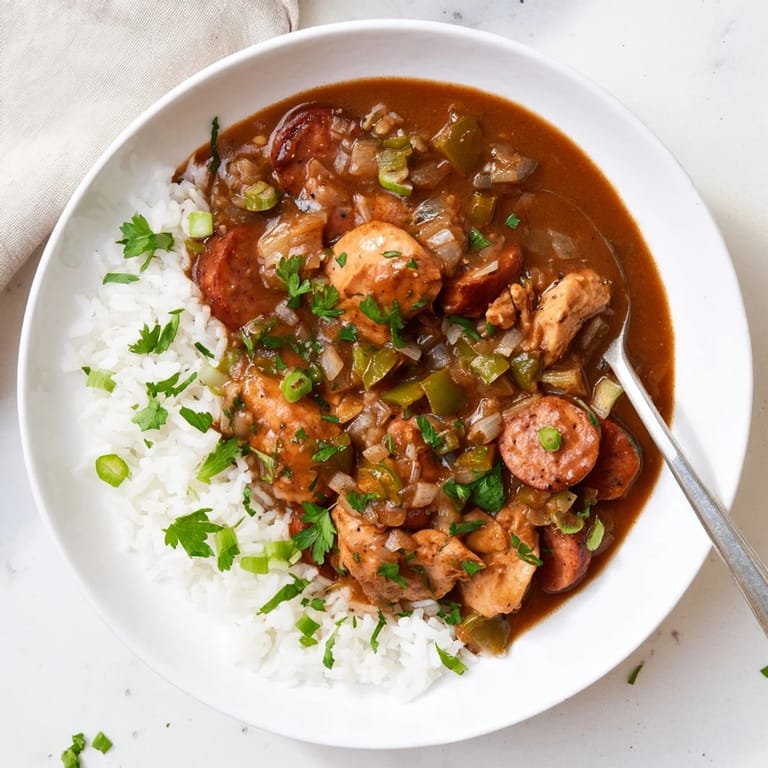
Save There is something magical about a pot of gumbo simmering on the stove, filling the whole house with promises of comfort and community. Make it for people you love.
Recipe Help & Answers
- → What makes a dark roux essential for authentic gumbo?
A dark roux, cooked to a deep chocolate brown color for 15-20 minutes, provides the signature rich flavor and thickening power that defines authentic Louisiana gumbo. The flour and oil mixture develops nutty, caramelized notes that form the foundation of the dish's complex taste profile.
- → Can I make gumbo without shellfish?
Absolutely. Simply omit the shrimp and use only chicken and andouille sausage, or create a meatless version using additional vegetables and vegetable broth. The dark roux and seasonings still provide plenty of depth and character to the finished dish.
- → What is the holy trinity in Cajun cooking?
The holy trinity refers to the three aromatic vegetables that form the base of Louisiana cooking: onions, green bell peppers, and celery. This combination creates a flavorful foundation that's essential to gumbo, jambalaya, and other classic Cajun and Creole dishes.
- → How do I prevent the roux from burning?
Constant stirring is crucial when making a dark roux. Use a heavy-bottomed pot or Dutch oven to ensure even heat distribution, and maintain medium heat throughout. The mixture will gradually darken from blonde to peanut butter color to deep chocolate brown—be patient and don't step away from the stove.
- → What is filé powder and when should I add it?
Filé powder is made from dried sassafras leaves and is a traditional gumbo thickener and flavor enhancer. Add it at the very end of cooking, off the heat, to avoid the mixture becoming stringy or gummy. Start with ½ teaspoon and add more to achieve your desired consistency.
- → How long does gumbo keep and can it be frozen?
Gumbo tastes even better on the second or third day as flavors continue to develop. Store in the refrigerator for up to 4 days. For longer storage, freeze for up to 3 months—just omit the filé powder if freezing, and add it when reheating. Reheat gently over low heat, adding a splash of broth or water if needed.