 Save
Save My neighbor handed me a bunch of Swiss chard from her garden one afternoon, still wet from the morning watering, and I had no idea what to do with it. A week of scrolling through recipes led me to this soup, and honestly, it became the thing I make whenever I need something that feels both nourishing and effortless. There's something about how the chard softens into the broth, turning it a gentle green while the garlic whispers through everything, that just works.
I made this for my partner on a rainy Tuesday when neither of us had slept well, and watching them eat three bowls while staring out at the wet garden told me everything I needed to know about whether this recipe belonged in regular rotation. There's a kind of magic in soup that doesn't require elaborate technique but somehow still feels like you tried.
Ingredients
- Swiss chard: The whole bunch matters, not just the leafy green parts—those tender stems add a subtle sweetness and structure that deepens the soup's character.
- Yellow onion, carrots, and celery: This traditional trio is the backbone that builds flavor slowly and honestly without needing to shout.
- Garlic: Three cloves feels like the sweet spot where you taste the garlic without it overpowering everything else in the pot.
- Vegetable broth: Use something you'd actually drink on its own, because it becomes the main voice in this soup.
- Olive oil: Two tablespoons is enough to gently coax out flavors without making the soup heavy or greasy.
- Sea salt and black pepper: Taste as you go, because the salt level can shift depending on your broth.
- Red pepper flakes: Optional but worth the tiny pinch if you like a whisper of warmth running underneath everything.
- Lemon juice: This is the secret that transforms mild into memorable, brightening everything at the very end.
- Fresh parsley: A handful at the finish adds something fresh that reminds you this soup is alive and vibrant.
- Parmesan cheese: Not essential, but if you choose it, grate it fresh and generously.
Tired of Takeout? 🥡
Get 10 meals you can make faster than delivery arrives. Seriously.
One email. No spam. Unsubscribe anytime.
Instructions
- Start your foundation:
- Heat olive oil in a large pot over medium heat until it moves easily around the bottom. Add your chopped onion, carrots, and celery, then let them soften for 5 to 6 minutes, stirring occasionally so they cook evenly without browning.
- Build the flavor:
- Stir in the minced garlic and those separated chard stems, letting them sauté together for 2 to 3 minutes until the kitchen fills with that unmistakable garlic aroma and the stems just begin to lose their raw edge.
- Welcome the greens:
- Add the Swiss chard leaves, vegetable broth, salt, pepper, and red pepper flakes if using. Watch as everything comes to a boil, then immediately dial down the heat to a gentle simmer where just a few lazy bubbles break the surface.
- Let time work:
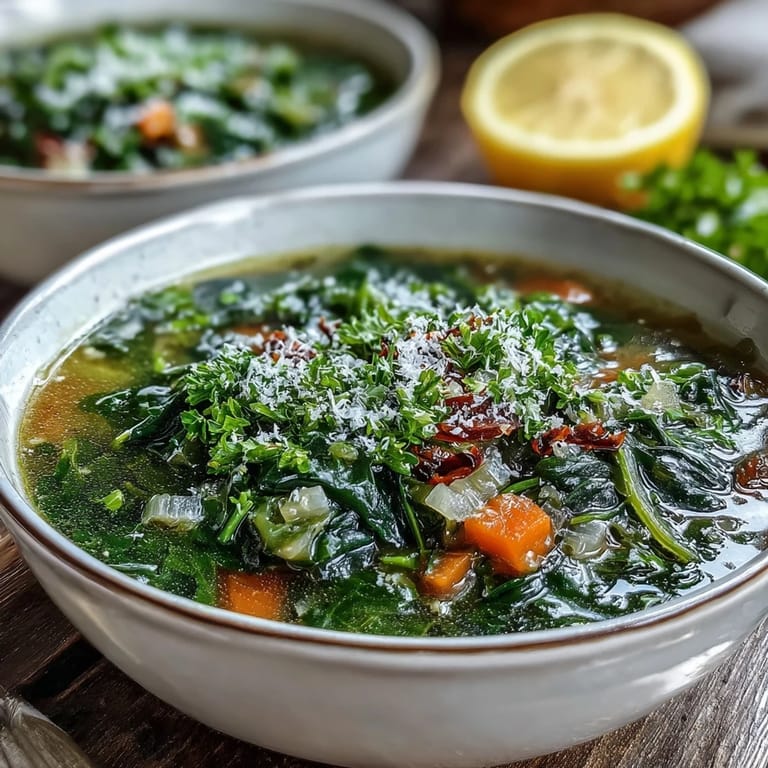
- Simmer uncovered for 15 to 20 minutes, allowing the vegetables to become deeply tender and all the flavors to meld into something greater than their individual parts. The broth will take on a soft green color that's genuinely beautiful.
- Wake it up:
- Stir in the lemon juice and fresh parsley, then taste carefully and adjust salt and pepper as needed. This is when the soup goes from good to something you'll want to remember.
- Serve with intention:
- Ladle the soup into bowls and top with grated Parmesan if you're using it. Serve while it's still steaming, ideally with some crusty bread nearby for soaking up every drop.
 Save
Save My friend who claims to hate leafy greens came back for seconds, and when I told her what the main ingredient was, she refused to believe me. That's when I knew this recipe had earned its place in my regular cooking rhythm.
About Swiss Chard
Swiss chard is one of those vegetables that looks intimidating until you realize how gentle it becomes when it cooks. The stems have a subtle mineral sweetness, while the leaves wilt into almost nothing, releasing their nutrients into the broth. It's less sharp than kale and less bitter than some other greens, which makes it perfect for people who want something wholesome without the drama.
Making It Your Own
This is a template more than a rigid formula, so feel free to wander a bit. If you have white beans in the pantry, drain and stir in a can for protein and heartiness. A diced potato added with the carrots gives the soup a more substantial body if you want it to feel like an actual meal. Even a handful of spinach or kale works if you can't find good chard, though the flavor profile shifts slightly.
The Comfort Angle
What makes this soup different from a hundred other vegetable soups is that it never feels austere or apologetic about being meatless. The combination of sautéed aromatics, tender vegetables, and bright lemon creates depth without requiring anything elaborate. It's the kind of soup you can make on a Tuesday and eat for lunch the rest of the week without getting bored.
- Double the recipe and freeze half in portions for mornings when you need something warming and ready immediately.
- If your broth is particularly salty, use less added salt and taste before increasing it.
- Leftover soup actually tastes better the next day once all the flavors have had time to know each other.
 Save
Save This soup reminds me that the best meals often come from the simplest ideas, treated with genuine attention. Make it, eat it, share it.
Recipe Help & Answers
- → Can I use frozen Swiss chard instead of fresh?
Yes, frozen Swiss chard works well. Use about 400g frozen, thawed and drained. Add it directly to the broth since stems are already processed. Reduce simmering time by 5 minutes.
- → How do I store leftover Swiss chard soup?
Store in an airtight container in the refrigerator for up to 4 days. The soup can also be frozen for up to 3 months. Reheat gently on the stovetop, adding a splash of broth if needed.
- → What can I substitute for Swiss chard?
Kale, spinach, or collard greens make excellent substitutes. Kale requires similar cooking time, while spinach cooks faster. Adjust simmering time based on the green you choose.
- → How can I make this soup more filling?
Add drained white beans, chickpeas, or diced potatoes for extra substance. Cooked pasta, rice, or farro also work well. Serve with crusty bread for a complete meal.
- → Why separate the Swiss chard stems from leaves?
Stems are tougher and require longer cooking time than the delicate leaves. Sautéing stems first ensures everything cooks evenly and develops better flavor throughout the soup.
- → Can I make this soup in advance?
Absolutely. The soup tastes even better the next day as flavors meld. Prepare up to 2 days ahead, store refrigerated, and reheat before serving. Add fresh lemon juice and parsley just before serving.