 Save
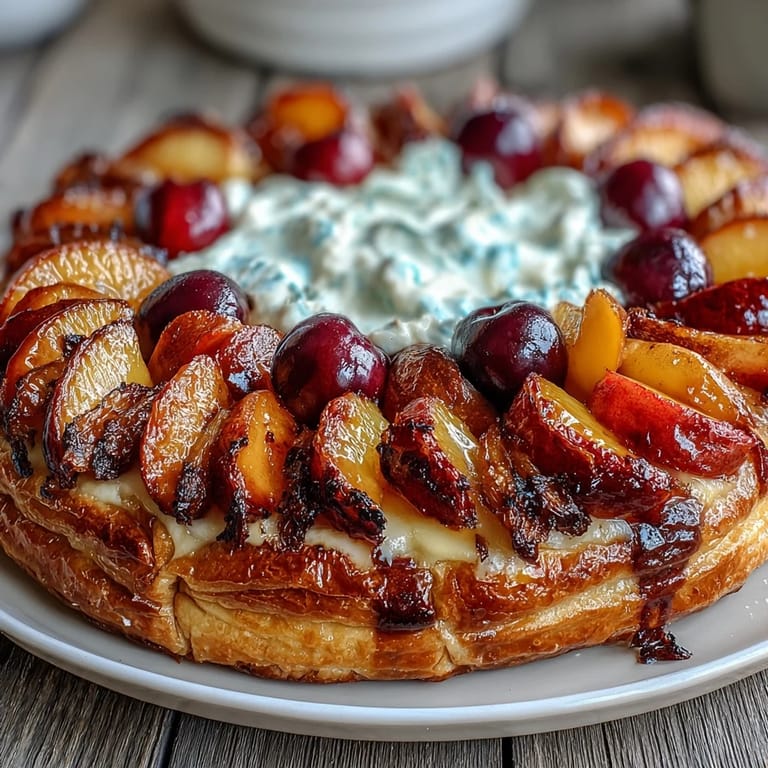
Save There's something about mid-July when the farmers market overflows with fuzzy peaches and deep purple plums that makes you want to bake something golden and rustic. I found myself with a bounty of stone fruits one sticky afternoon, hesitant to make anything that felt too formal or fussy. A galette seemed like the answer—the kind of dessert that looks intentionally imperfect, where a crooked edge or a fruit that shifts slightly during baking only adds to its charm. This version, layered with almond frangipane, turned out to be the kind of dish that tastes far more complicated than it actually is.
I made this for a Sunday dinner party where everyone arrived tired and hungry, expecting something that would take hours. Pulling a warm, bubbling galette from the oven after less than two hours total felt like a small victory, and watching my neighbor's face when she realized it was homemade pastry made the whole thing worthwhile. The conversation shifted entirely once we started eating—suddenly everyone wanted to know when I'd become a baker, which made me laugh because it's really just butter, fruit, and a little confidence.
Ingredients
- All-purpose flour: The foundation of a tender, flaky pastry that doesn't require special cake flour or bread flour—trust what you have in your pantry.
- Cold unsalted butter: This is non-negotiable for lamination; I freeze mine for 10 minutes before cutting into cubes so the dough actually develops those precious flaky layers.
- Ice water: Keep it genuinely cold by adding actual ice cubes to your water, then measure—warm water is the enemy of tender pastry.
- Almond flour: Creates a subtle, nutty base that doesn't overpower the fruit; if you can't find it, finely ground blanched almonds work beautifully.
- Mixed stone fruits: The magic happens when you combine different varieties—peaches provide sweetness, plums add tartness and color, nectarines stay firm, and apricots bring their own delicate flavor.
- Egg wash: Beaten egg creates that glossy, golden finish that makes people think you spent all day in the kitchen.
- Coarse sugar: Adds a gentle crunch and catches light in a way that regular granulated sugar never does.
Tired of Takeout? 🥡
Get 10 meals you can make faster than delivery arrives. Seriously.
One email. No spam. Unsubscribe anytime.
Instructions
- Make the pastry dough:
- Whisk flour, sugar, and salt together, then work in cold butter cubes with a pastry blender or your fingertips until the mixture looks like coarse breadcrumbs with some pea-sized pieces still visible. Drizzle in ice water gradually, stirring just until the dough begins to come together—you want it slightly shaggy, not smooth.
- Chill and rest:
- Flatten the dough into a disk, wrap it, and let it sit in the fridge for at least 30 minutes; this relaxes the gluten and makes rolling infinitely easier. If you have time, overnight chilling is even better.
- Prepare the frangipane base:
- Cream softened butter and sugar together until pale and fluffy, then beat in the egg one piece at a time. Fold in almond flour, vanilla, almond extract if using, and salt until you have a smooth, spreadable paste.
- Toss the fruit filling:
- Combine sliced stone fruits with sugar, cornstarch, and lemon juice in a bowl, stirring gently to coat; the cornstarch will absorb excess moisture and prevent a soggy bottom crust. Let it sit for a few minutes—the fruit will begin releasing its juice.
- Roll out the dough:
- On a lightly floured surface, roll the chilled dough into a roughly 12-inch circle, working from the center outward and rotating the dough every few rolls. If it cracks at the edges, simply press it back together—this is rustic baking, not precision work.
- Build the galette:
- Transfer the rolled dough to a parchment-lined baking sheet, then spread frangipane over it in an even layer, leaving a 2-inch border around the edges. Arrange your fruit slices over the frangipane in overlapping concentric circles or however feels right to you.
- Fold and finish:
- Fold the pastry edges up and over the filling, pleating gently as you go—some fruit will peek through and that's exactly what you want. Brush the pastry with beaten egg, sprinkle with coarse sugar, and let it rest while the oven preheats.
- Bake until golden:
- Bake at 400°F for 35 to 40 minutes until the pastry is deep golden brown and you can see the fruit bubbling slightly at the edges. The kitchen will smell like caramelized fruit and butter—that's when you know it's nearly done.
 Save
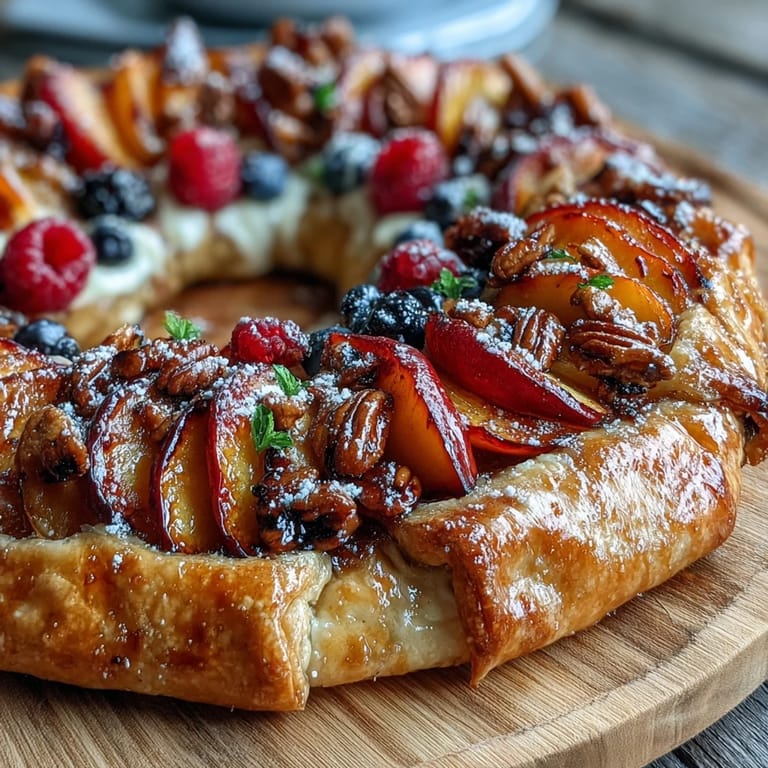
Save What struck me most while making this galette was how it changed the tone of the entire meal. Everyone lingered longer at the table, cutting into slices while they were still warm, sharing their fruit discoveries—someone always gets extra plum, someone else discovers a perfect peach underneath. Suddenly it wasn't just dessert; it was an event, the kind of thing people remember and ask for next summer.
The Art of the Rustic Edge
The beauty of a galette lies in its imperfection. Unlike a formal tart with its crimped edges and geometric precision, a galette celebrates the hand-made quality of home baking. Your pleats don't need to be uniform, your circle doesn't need to be perfect, and if a piece of fruit shifts during baking, that's not a failure—it's character. I've noticed that people relax when they realize you're not aiming for bakery-perfect; suddenly they feel permission to enjoy the rustic charm instead of critiquing precision.
Fruit Selection and Ripeness
The quality of your galette truly depends on the fruit you choose. I've learned to squeeze gently at the farmers market—you want fruit that yields slightly to pressure but isn't mushy. A mix of varieties creates a more interesting flavor profile than using just one type of stone fruit; the tartness of plums balances the sweetness of peaches in a way that feels almost planned. This is also where you can flex seasonally—whatever looks best that day is exactly what should go into your galette.
Make-Ahead Magic and Storage Tips
Both the pastry dough and frangipane can be prepared a full day ahead, which means you can have fresh galette on the table with almost no last-minute stress. The assembled, unbaked galette also holds well in the fridge for several hours before baking, allowing you to pop it in the oven just when guests are arriving. Leftovers keep surprisingly well at room temperature for a day or two, though they're best served warm with a scoop of vanilla ice cream or a dollop of whipped cream.
- Wrap assembled galettes tightly in plastic wrap if making ahead, and bake directly from the fridge without thawing.
- Refrigerate the dough for at least 30 minutes, but overnight is even better for developing flavor and making it easier to handle.
- Room-temperature galette is delicious the next day, but a few minutes in a warm oven brings back that fresh-from-the-pan magic.
 Save
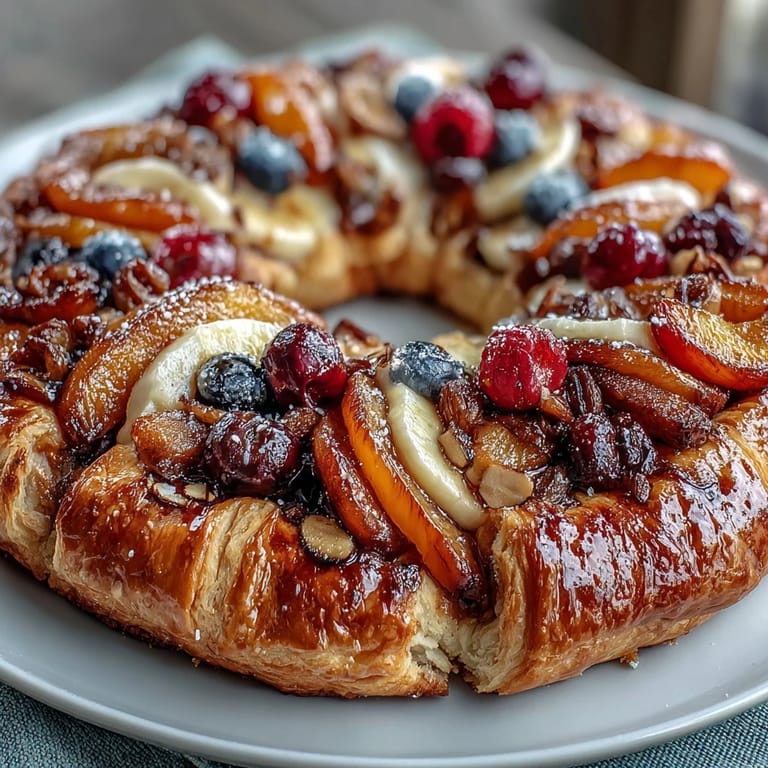
Save This galette has become my answer to summer entertaining—it's elegant enough to impress but forgiving enough that even a moment of distraction won't derail you. Every time I make it, I'm reminded that the best desserts are the ones that bring people together with their warmth and simplicity.
Recipe Help & Answers
- → What fruits work best in this galette?
Use ripe stone fruits like peaches, plums, nectarines, apricots, and cherries for a balanced sweet and tart filling.
- → Can I prepare the pastry and almond filling ahead?
Yes, the dough and almond filling can be made in advance and refrigerated overnight for convenience.
- → How do I achieve a flaky crust?
Keep butter cold and handle the dough minimally to preserve lumps of butter that create flakiness when baked.
- → What is the purpose of lemon juice in the filling?
Lemon juice brightens the flavors and helps balance the sweetness of the stone fruits.
- → How should I store leftovers?
Cover leftovers with plastic wrap and refrigerate. Reheat gently to retain flakiness before serving.