 Save
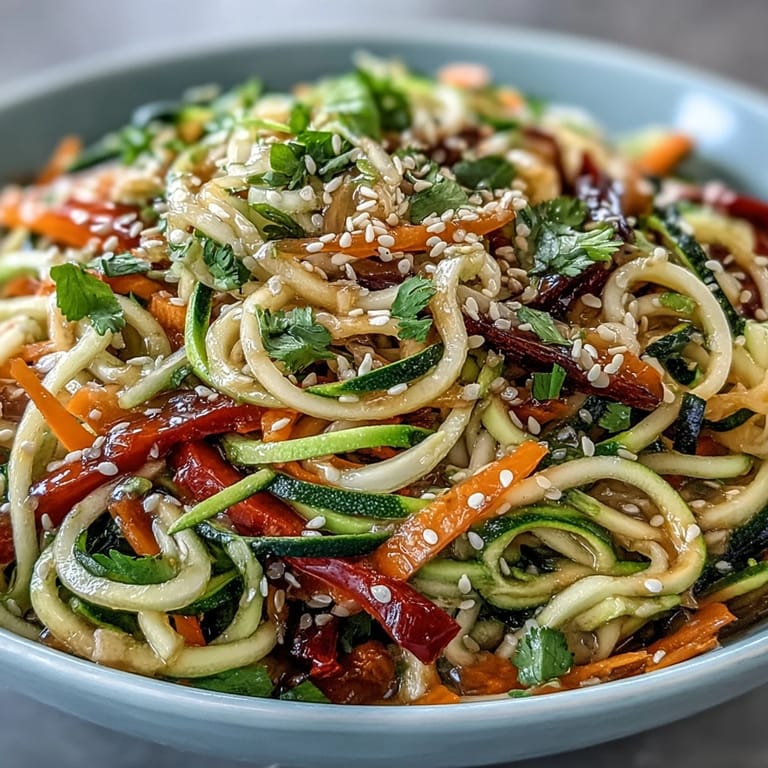
Save My spiralizer sat in a kitchen drawer for months before I finally pulled it out on a sweltering afternoon, desperate for something that didn't require turning on the stove. What started as pure laziness became an obsession—watching those vegetables transform into delicate ribbons felt almost meditative, and the moment I tossed everything together with that nutty sesame dressing, I realized I'd stumbled onto something genuinely special. Now this salad appears whenever I need to feel lighter, brighter, or just want to prove to myself that good food doesn't require heat or complicated techniques.
I made this for my sister's surprise lunch visit, and she ate the entire bowl while standing at my kitchen counter, barely pausing between bites. That moment—seeing someone genuinely delighted by something I'd just assembled—reminded me that the best meals aren't always about complexity or hours of work. Sometimes they're just about fresh vegetables, bold flavors, and paying enough attention to get the balance exactly right.
Ingredients
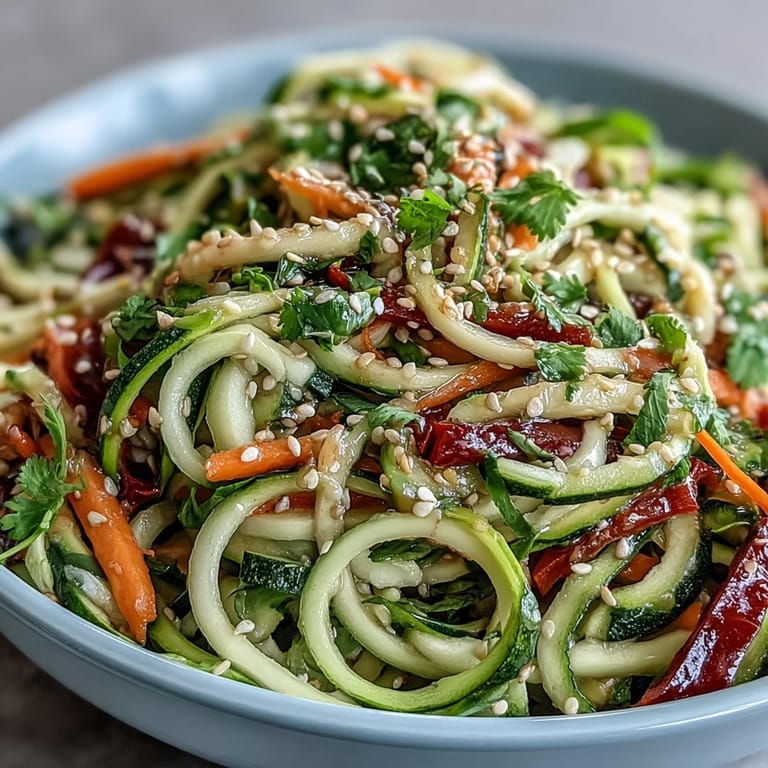
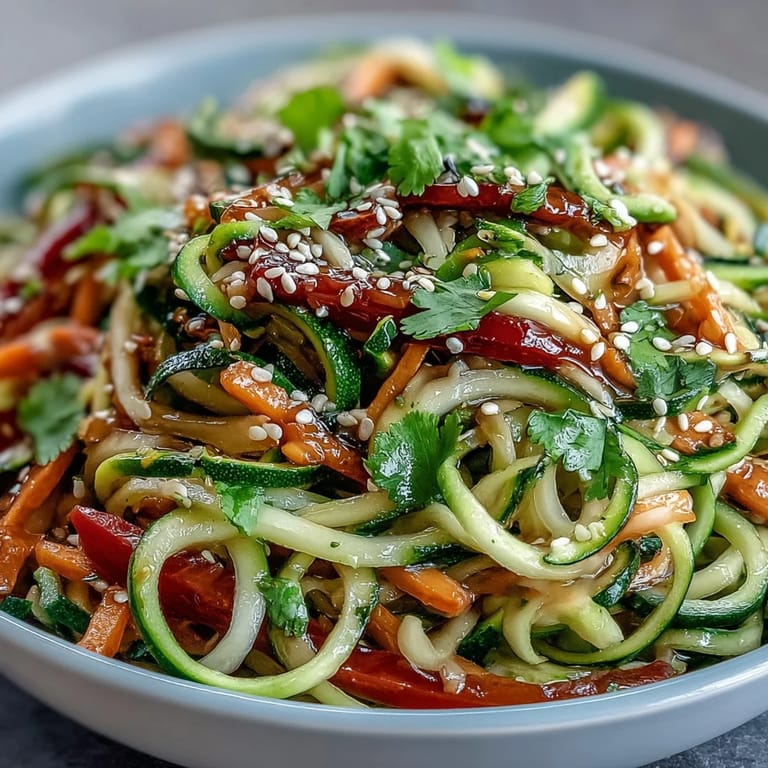
- Zucchini: Spiralize it raw to keep that tender-crisp texture; it absorbs the dressing beautifully without getting soggy if you don't let it sit too long.
- Carrot: Raw spiralized carrot adds a subtle sweetness and bright color that makes the whole bowl feel alive.
- Red bell pepper: I slice this thin by hand because the spiral pieces sometimes get too delicate; it provides a crisp sweetness that balances the ginger heat.
- Red cabbage: Shred it thin and pack it in—it holds up better than other vegetables and adds an earthy crunch.
- Cucumber: Spiralize it just before serving to keep it from releasing water into the salad; it should taste fresh and snappy.
- Green onions: The raw bite here is essential; it cuts through the richness of the sesame oil and wakes up your palate.
- Fresh cilantro: This isn't optional in my kitchen—it adds an herbal brightness that ties everything together.
- Toasted sesame oil: Use the real stuff, not the light kind; three tablespoons is enough to coat everything without drowning it, and toasted oil has that deep, nutty flavor that makes people ask what your secret is.
- Rice vinegar: It's mild enough to balance the soy sauce and sesame without being aggressive.
- Low-sodium soy sauce or tamari: Tamari is naturally gluten-free and tastes just as rich; stick with low-sodium so the dressing stays balanced.
- Fresh ginger: Grate it right before mixing the dressing—the difference between fresh and pre-grated is the difference between a good salad and one that tastes alive.
- Maple syrup or honey: Just a touch to round out the sharp edges of vinegar and ginger; it shouldn't taste sweet.
- Garlic: One clove minced fine is all you need; too much and you're eating a garlic salad.
- Lime juice: A squeeze of brightness that makes the whole dressing sing.
- Chili flakes: Optional but I always include them; they add a whisper of heat that builds as you eat.
- Toasted sesame seeds: These are your finishing flourish—they add nuttiness and texture right at the moment the salad might start to feel soft.
- Roasted peanuts or cashews: If you use them, they should be properly salted; they turn this into a meal rather than just a side.
Tired of Takeout? 🥡
Get 10 meals you can make faster than delivery arrives. Seriously.
One email. No spam. Unsubscribe anytime.
Instructions
- Prep your vegetables with intention:
- Wash everything first and pat it completely dry—water is the enemy of a crisp salad. As you spiralize and slice, place each vegetable in your large bowl; this way everything stays together and you're not hunting for bowls halfway through.
- Build the dressing while you wait:
- In a separate bowl, whisk the sesame oil, rice vinegar, soy sauce, ginger, maple syrup, minced garlic, and lime juice together. The dressing should smell immediately complex and slightly sweet—if it smells one-dimensional, adjust the lime juice or ginger.
- Unite vegetables and dressing:
- Pour the dressing over your vegetables and toss gently but thoroughly, making sure every strand gets coated. This is where patience matters; use your hands if you need to, just be gentle so the vegetables stay intact.
- Let flavors find each other:
- Set the salad aside for five to ten minutes—this resting time allows the dressing to soften the vegetables slightly while the flavors meld into something greater than their parts. Don't skip this step even if you're hungry.
- Finish and serve:
- Transfer to a serving platter, scatter sesame seeds and nuts across the top, and add a final pinch of cilantro. Serve right away while everything still has that snappy freshness that makes people reach for seconds.
 Save
Save There's something about eating this salad in summer, sitting outside with a cold drink, that feels like the whole year has been leading to that exact moment. It's the kind of food that makes you feel nourished rather than restricted, which is the highest compliment I can give anything.
Variations That Work
I've spiralized yellow squash instead of zucchini when I wanted extra sweetness, and daikon radish when I wanted something spicier and more assertive. Beetroot spirals turn everything a shocking pink and taste earthy in the best way, though they'll stain your hands and bleed into the other vegetables. Red cabbage is honestly the most forgiving substitute—it's hearty, it holds up, and it adds visual drama. The dressing stays constant; it's flexible enough to handle whatever vegetables you throw at it.
Making It a Complete Meal
This salad shines as a side dish, but it transforms into a full lunch or dinner with just one addition. I've tucked baked tofu cubes into the middle and suddenly it's substantial enough for a quiet solo meal. Adding edamame gives you plant-based protein and a pop of green color that photographs beautifully.
Storage and Make-Ahead Strategy
You can prep the vegetables and dressing separately ahead of time, keeping them in different containers in the refrigerator for up to two days. The magic only happens when you combine them right before eating, which sounds like extra work but it's actually the reason this tastes so much better than salads that sit around getting soggy. If you absolutely must make it ahead, go light on the dressing and plan to eat it within two hours.
- Keep the dressing in a jar and shake it vigorously right before tossing—the oils and vinegars separate as they sit.
- Pat your spiralized vegetables dry a second time if they're releasing moisture; moisture is what makes everything limp.
- Toast your own sesame seeds if you can—the difference between pre-toasted and fresh-toasted is noticeable and worth those five minutes.
 Save
Save This salad has become my answer to so many kitchen moments—when I want something fast, when I need to feel healthy, when I have friends coming over and want to impress them without stress. It's proof that simple ingredients and good technique can create something genuinely memorable.
Recipe Help & Answers
- → What vegetables work best for spiralizing?
Zucchini, carrots, cucumber, yellow squash, daikon radish, and beetroot spiralize beautifully. Choose firm, fresh vegetables for the best results.
- → Can I make this salad ahead of time?
Prepare the vegetables and dressing separately up to 24 hours in advance. Toss together just before serving to maintain the crisp texture.
- → How do I adjust the spice level?
Start with 1/2 teaspoon chili flakes and increase gradually. Fresh minced jalapeño or sriracha can also be added to the dressing for more heat.
- → What proteins pair well with this salad?
Baked tofu, edamame, grilled chicken, shrimp, or salmon complement the Asian-inspired flavors. Add protein directly to the salad or serve alongside.
- → Is this suitable for meal prep?
Yes! Store components separately in airtight containers. Keep dressed salad refrigerated for up to 3 days, though vegetables will soften over time.