 Save
Save My grandmother used to make this soup on quiet afternoons when someone in the family needed tending to—not with fuss, but with the kind of gentle care that comes from a steaming bowl. I watched her palms work the ginger against the grater, the kitchen filling with that sharp, clean scent before she'd even touched the stove. Years later, I realized she wasn't just feeding us; she was teaching us that the simplest ingredients, treated with patience, could become something that felt like a hug.
I made this for a friend who'd just moved into a new apartment with nothing but boxes and confusion in every corner. She sat at my kitchen counter while I worked, and by the time the soup was ready, the worry had softened from her face—replaced by the kind of relief that only a bowl of something honest and hot can bring.
Ingredients
- Dried mung beans: Soak them overnight if you can; it softens them and makes digestion easier, though 4 hours works in a pinch.
- Onion, garlic, ginger: This trio is the backbone—don't skimp or rush through chopping, because their flavors need room to develop and meld.
- Carrot and tomato: They add sweetness and body; the tomato especially breaks down into the broth and gives it depth.
- Ground cumin and coriander: Toast these mentally as you add them—they're warm, earthy, and essential to the soul of this dish.
- Turmeric powder: The golden color isn't just pretty; it's anti-inflammatory and gives the soup its signature warmth.
- Mustard seeds: That sizzle when they hit the oil is the sound of flavor unlocking—never skip this step.
- Water or vegetable broth: Broth will give you more depth, but water lets the spices speak without competition.
- Fresh cilantro and lemon juice: These finish the soup with brightness, cutting through the richness and reminding your palate to pay attention.
Tired of Takeout? 🥡
Get 10 meals you can make faster than delivery arrives. Seriously.
One email. No spam. Unsubscribe anytime.
Instructions
- Prepare your beans:
- Drain and rinse the soaked mung beans under cold water, looking for any small stones hiding among them—your teeth will thank you later.
- Awaken the spices:
- Heat oil in a large pot over medium heat, then add mustard seeds and listen for that eager sizzle, about 30 seconds, which tells you the pan is ready for the vegetables.
- Build your flavor base:
- Add onion, garlic, and ginger, letting them soften for 3 minutes until the onion turns translucent and the kitchen fills with their fragrance.
- Introduce the rest:
- Stir in carrots, tomato, green chili, cumin, coriander, turmeric, black pepper, and asafoetida, cooking for 2 more minutes so the spices toast lightly and lose their raw edge.
- Simmer into softness:
- Add your rinsed mung beans and pour in water or broth, bring to a boil, then lower the heat and let it bubble gently uncovered for 35–40 minutes until the beans are tender and the liquid has thickened into something that coats the spoon.
- Season and brighten:
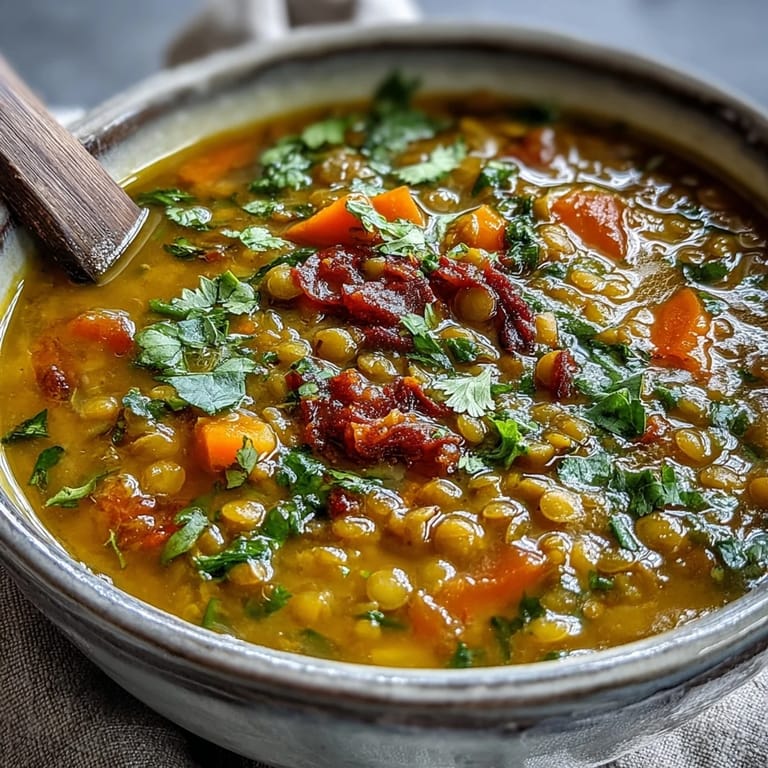
- Taste it first, adjust the salt, then squeeze in lemon juice and scatter cilantro over the top before serving.
 Save
Save There was a moment when my mother-in-law first tasted this soup and closed her eyes, and I understood then that food carries memory across cultures and kitchens, connecting us to everyone who came before and everyone we feed after.
The Comfort of Simplicity
This soup asks nothing of you except attention and time—two things that become more precious the busier we get. There's something meditative about chopping vegetables with intention, about waiting for beans to soften into surrender, about watching a pale broth gradually deepen into something golden and alive with spice.
Making It Your Own
I've learned that the best recipes are the ones you adjust without fear, so if your kitchen doesn't have asafoetida, leave it out; if spinach speaks to you more than carrots, add that instead. The soul of this soup isn't in following rules perfectly—it's in understanding that warming spices and soft beans and your own intention create something nourishing no matter what.
Serving and Pairing
This soup reaches its fullest potential when paired with something to round out the meal, something to catch the broth and carry it to every corner of your plate.
- Serve it over steamed rice or alongside warm flatbread for a complete meal that sticks with you.
- For a creamier version, gently mash some of the cooked beans against the side of the pot to release their starch into the broth.
- Add a handful of spinach or kale in the last 5 minutes if you want to layer in extra nutrition without changing the soul of the dish.
 Save
Save This is the kind of soup that teaches you something every time you make it, that settles into your bones and reminds you why cooking for yourself and others matters. It's humble enough to eat alone on a Tuesday night, and nourishing enough to serve to anyone who walks through your door.
Recipe Help & Answers
- → Do I need to soak mung beans before cooking?
Yes, soaking mung beans for 4 hours or overnight helps them cook evenly and reduces cooking time. Rinse thoroughly after soaking before adding to the pot.
- → Can I make this soup in a pressure cooker or Instant Pot?
Absolutely. Cook on high pressure for 12-15 minutes, then allow natural release. The beans will become perfectly tender and creamy in less time.
- → How long does this soup keep in the refrigerator?
The soup stores well for 4-5 days in an airtight container. The flavors actually deepen and improve after a day or two. Reheat gently on the stovetop, adding a splash of water if needed.
- → Can I freeze this soup?
Yes, this freezes beautifully for up to 3 months. Cool completely before transferring to freezer-safe containers. Thaw overnight in the refrigerator and reheat on the stovetop.
- → What can I serve with mung bean soup?
Steamed basmati rice, warm naan or roti bread, or quinoa make excellent accompaniments. The soup also pairs well with a simple cucumber raita or pickled vegetables on the side.
- → Is this soup spicy?
The soup has mild warmth from spices like turmeric and black pepper, plus optional green chili. It's flavorful but not overly hot—adjust the chili or omit it entirely for a milder version.