 Save
Save The roux was burning and I didnt even realize it until my neighbor Miss Clara banged on my ceiling with her broom handle. Id been attempting my first gumbo after moving to New Orleans, thinking thirty minutes of stirring flour and oil couldnt possibly be that serious. She came down stairs already laughing, handed me a beer, and showed me how the color should look like milk chocolate not charcoal. We scraped out my failed attempt and started over together, her standing watch while I stirred what felt like the longest twenty minutes of my life.
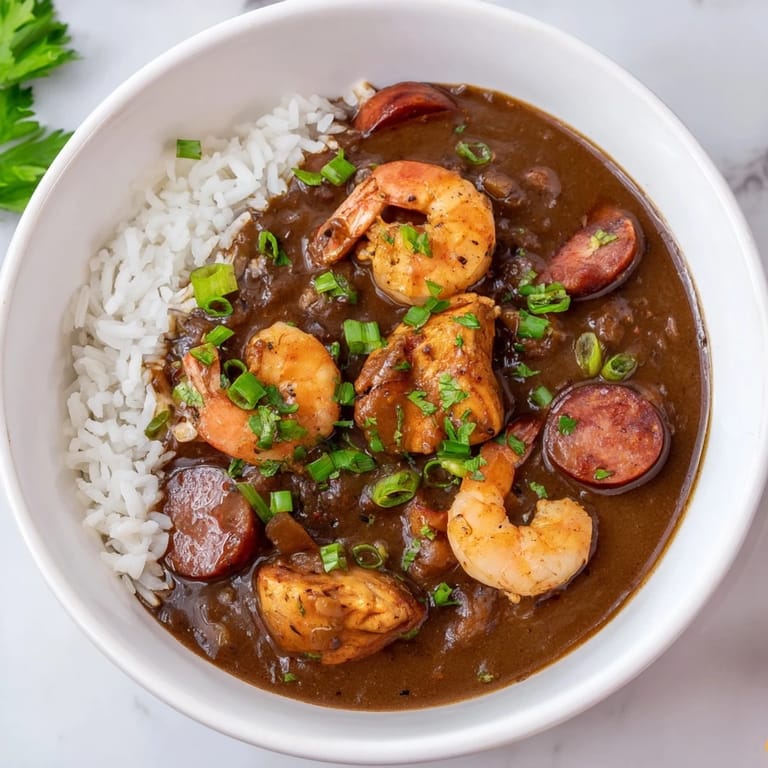
Last winter my brother came to visit during the coldest week wed seen in years. I made a massive pot of gumbo that simmered on the stove all afternoon while we caught up on three years of stories. When we finally sat down to eat bowls so full they threatened to spill over, he took one bite and went completely silent. He told me later that he knew Id finally found my place in the city when the gumbo tasted like it had been simmering for generations not just a few hours.
Ingredients
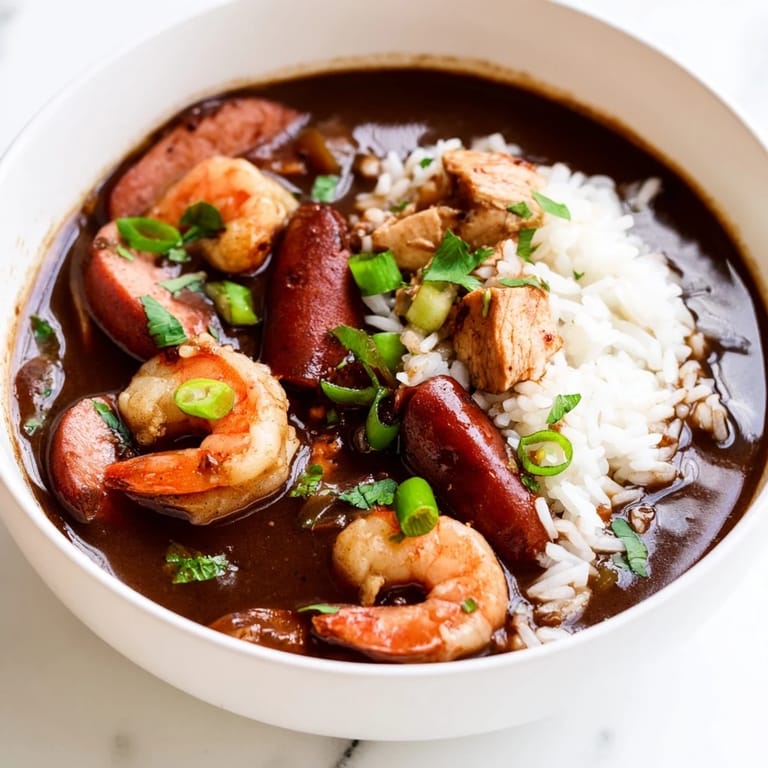
- Andouille sausage: This smoked pork sausage brings the essential Cajun flavor that makes gumbo authentic
- Boneless chicken thighs: Dark meat stays tender during long simmering and contributes rich body to the broth
- Medium shrimp: Add these only in the final minutes so they stay sweet and dont turn rubbery
- Onion, bell pepper, celery: Together these form the holy trinity the aromatic foundation of Louisiana cooking
- Vegetable oil and flour: The combination creates your roux the thickener that gives gumbo its signature silky texture
- Chicken or seafood stock: Use homemade if you can because storebought brands vary wildly in quality
- Bay leaves, thyme, smoked paprika: These dried herbs build layers of flavor that develop during long simmering
Tired of Takeout? 🥡
Get 10 meals you can make faster than delivery arrives. Seriously.
One email. No spam. Unsubscribe anytime.
Instructions
- Mise en place like a professional:
- Chop every single vegetable before you turn on the stove because once that roux starts cooking you cannot step away
- Make the roux properly:
- Whisk flour into hot oil and stir constantly for 15 to 20 minutes until it turns the color of milk chocolate
- Add the holy trinity:
- Toss in onion, bell pepper and celery then cook for five minutes while the mixture bubbles enthusiastically
- Bloom the garlic briefly:
- Stir in minced garlic for just one minute so it releases fragrance without bitterness
- Brown the proteins:
- Add sausage and chicken chunks letting them develop a light golden color in the hot roux
- Build the spice foundation:
- Stir in tomatoes, bay leaves, thyme, paprika, cayenne, salt and pepper until everything smells incredible
- Create the base:
- Pour in stock gradually while stirring then bring to a boil before dropping to a low simmer
- Let it develop:
- Simmer uncovered for 45 minutes checking occasionally and adjusting heat if it gets too vigorous
- Add delicate seafood:
- Drop in shrimp during the final ten minutes and watch for them to turn pink and opaque
- Finish with flourish:
- Stir in Worcestershire, hot sauce and filé powder then taste and adjust salt one last time
 Save
Save My friend from Louisiana said real gumbo brings people together like nothing else because it demands patience and rewards you for it. The best version Ive ever made fed eight people who started as strangers and left as family after sharing that one communal bowl.
Understanding the Roux
The roux is everything in gumbo and its also the most technically demanding part of the recipe. I keep a separate bowl of flour and oil measured out before I start because if I burn it I need to begin again immediately without measuring in a panic. The color progression goes from white to blonde to peanut butter to the milk chocolate shade you actually want and it can go from perfect to burnt in thirty seconds flat.
The Holy Trinity Difference
Many recipes skip celery or substitute easier vegetables but the three parts onion to two parts bell pepper to one part celery ratio matters more than you think. I once tried using red bell pepper because it looked pretty and the sweetness threw off the entire flavor profile. Stick to green bell pepper for the authentic taste that balances the rich roux and spicy andouille.
Serving and Storing
Gumbo actually tastes better on day two when the flavors have had more time to meld in the refrigerator. Store it without the rice because the rice will absorb all the liquid and turn to mush overnight.
- Reheat gently over low heat adding a splash of water or stock if it seems too thick
- Serve with extra hot sauce on the table so everyone can adjust their own heat level
- Pass filé powder at the table so guests can add more thickening if they prefer
 Save
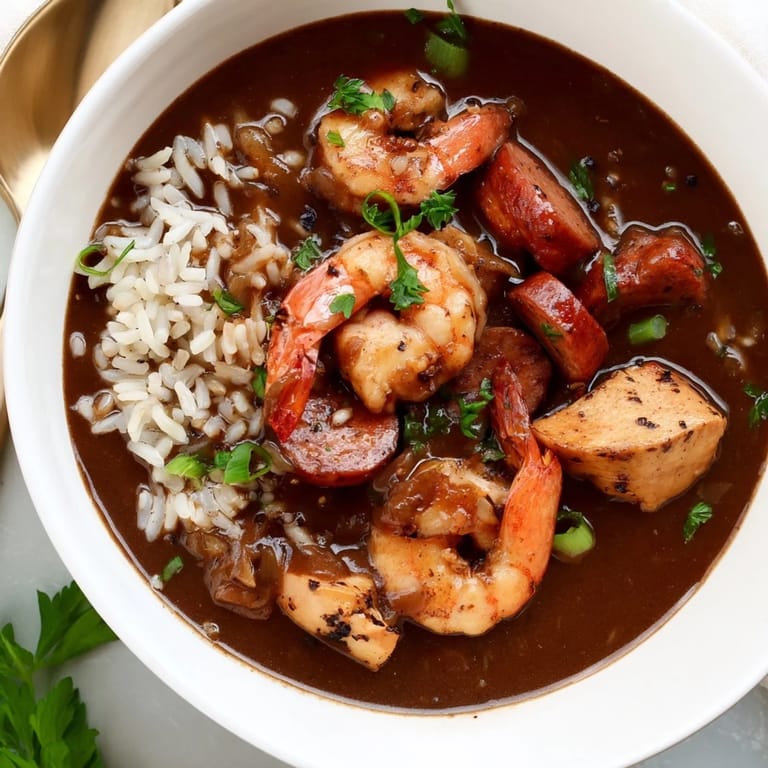
Save Theres something deeply satisfying about setting a steaming pot of gumbo on the table and watching everyone lean in at the same time. Good gumbo makes people stay at the table longer.
Recipe Help & Answers
- → What makes a gumbo authentic?
Authentic gumbo starts with a dark chocolate-colored roux made from flour and oil, cooked slowly for 15-20 minutes. The holy trinity of onions, bell peppers, and celery provides the aromatic base, while andouille sausage adds essential smoky flavor. A good gumbo also includes filé powder (ground sassafras leaves) for traditional thickening and distinct flavor.
- → How do I know when my roux is ready?
Your roux is ready when it reaches a deep chocolate brown color, similar to peanut butter or darker. This typically takes 15-20 minutes of constant stirring over medium heat. Be careful not to burn it—if you see black specks or smell a burnt aroma, you'll need to start over as the flavor will be bitter.
- → Can I make gumbo ahead of time?
Yes, gumbo actually tastes better the next day as flavors meld together. Prepare it up to 2 days in advance and refrigerate. Reheat gently over low heat, adding a splash of water or stock if needed to thin the consistency. Hold off on adding shrimp until reheating to prevent overcooking.
- → What's the difference between Cajun and Creole gumbo?
Cajun gumbo typically uses a darker roux and often includes okra or filé powder for thickening, with a focus on meats like andouille and chicken. Creole gumbo usually has a lighter roux, more tomatoes, and frequently features seafood. This version combines elements from both traditions for maximum flavor.
- → What should I serve with gumbo?
Classic white rice is the traditional accompaniment, soaking up the rich, flavorful broth. Other sides include cornbread, French bread, or potato salad. Offer hot sauce on the table for those who enjoy extra heat. A crisp lager or chilled white wine complements the bold, spicy flavors beautifully.