 Save
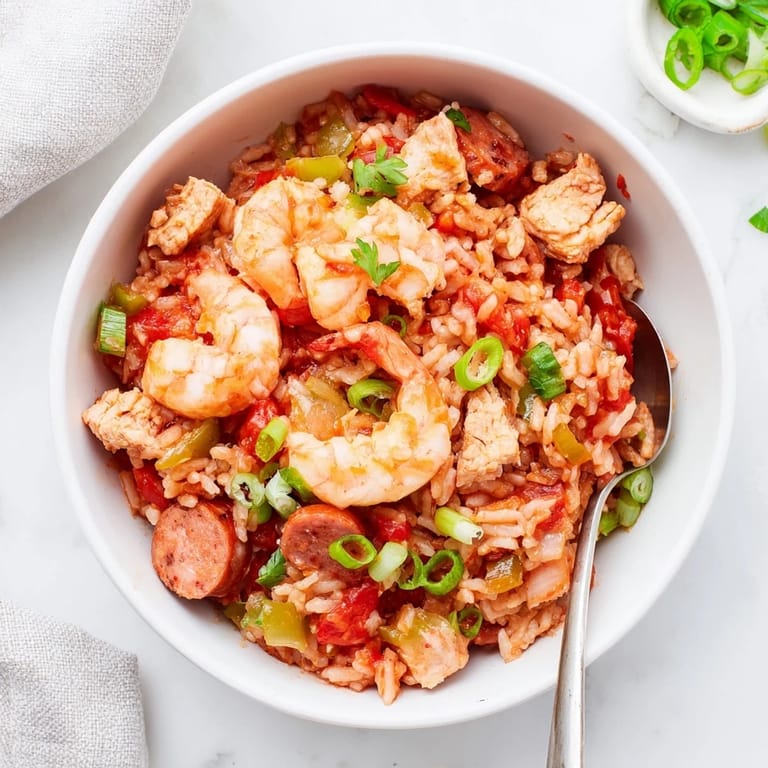
Save There's something magical about a dish that brings together the heart and soul of Louisiana in a single pot. Jambalaya, with its roots deeply embedded in Creole and Cajun traditions, tells the story of cultural fusion—a harmonious blend of Spanish, French, and West African influences that found its home in the bayous and kitchens of the Deep South. Every spoonful carries the warmth of generations who gathered around steaming pots, sharing stories and savoring the bold, comforting flavors that define this beloved classic.
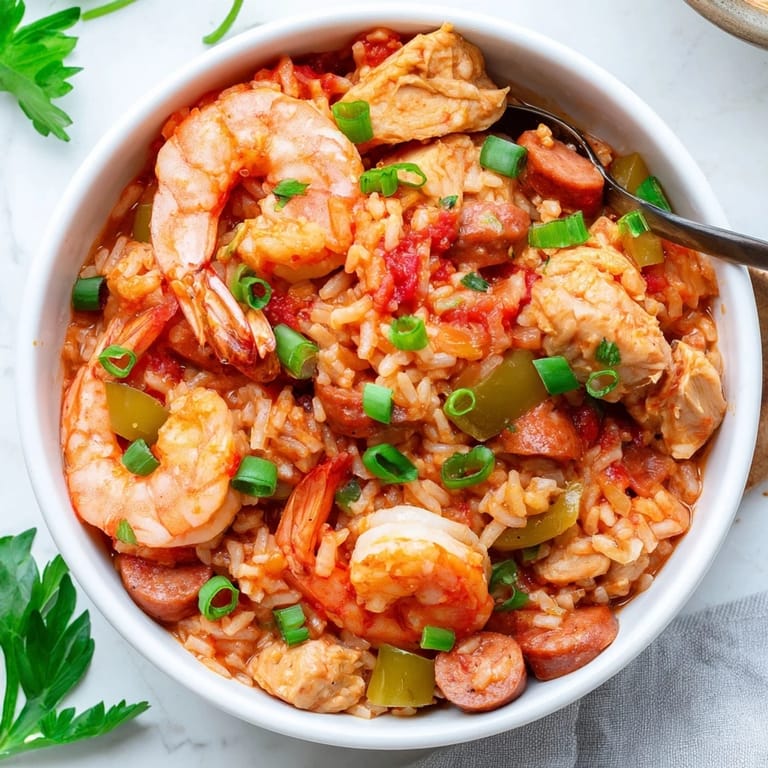
Save This jambalaya celebrates the art of building flavors through careful layering. By browning the meats first, then sautéing the aromatic vegetables in those flavorful drippings, you create a foundation of taste that infuses every grain of rice. The tomatoes add brightness, the spices bring warmth, and the shrimp nestled in at the end emerge perfectly pink and succulent—a testament to the thoughtful technique that makes this dish extraordinary.
Ingredients
Tired of Takeout? 🥡
Get 10 meals you can make faster than delivery arrives. Seriously.
One email. No spam. Unsubscribe anytime.
- Proteins: 225 g (8 oz) andouille sausage, sliced; 2 boneless, skinless chicken thighs (about 250 g/9 oz), cut into 2 cm (1-inch) pieces; 225 g (8 oz) large raw shrimp, peeled and deveined
- Vegetables: 1 medium onion, diced; 1 green bell pepper, diced; 2 celery stalks, diced; 3 garlic cloves, minced; 1 can (400 g/14 oz) diced tomatoes with juices; 2 spring onions, sliced (for garnish); 2 tbsp fresh parsley, chopped (for garnish)
- Rice & Liquids: 300 g (1½ cups) long-grain white rice, rinsed; 720 ml (3 cups) chicken broth
- Spices & Seasonings: 1½ tsp smoked paprika; 1 tsp dried thyme; 1 tsp dried oregano; 1 tsp cayenne pepper (adjust to taste); ½ tsp ground black pepper; 1 tsp salt (plus more to taste); 2 bay leaves; 2 tbsp vegetable oil; Hot sauce, to serve (optional)
Instructions
- Step 1: Brown the Sausage
- Heat 1 tablespoon oil in a large heavy-bottomed pot or Dutch oven over medium-high heat. Add sausage and cook until lightly browned, about 3–4 minutes. Remove sausage and set aside.
- Step 2: Brown the Chicken
- Add remaining oil. Season chicken pieces with a pinch of salt and pepper. Add to the pot and brown on all sides, about 4–5 minutes. Remove and set aside with sausage.
- Step 3: Sauté the Vegetables
- Add onion, bell pepper, and celery to the pot. Cook, stirring, until softened, about 5 minutes. Add garlic and cook for 1 minute more.
- Step 4: Toast the Rice and Spices
- Stir in rice, smoked paprika, thyme, oregano, cayenne, black pepper, and salt. Cook for 1 minute to toast spices.
- Step 5: Add Liquids
- Add diced tomatoes (with juices), chicken broth, and bay leaves. Stir well, scraping up any browned bits from the bottom.
- Step 6: Simmer
- Return sausage and chicken to the pot. Bring to a boil, then reduce heat to low. Cover and simmer for 20 minutes, stirring once halfway through.
- Step 7: Add Shrimp
- Nestle shrimp into the rice. Cover and cook for 5–7 minutes, until shrimp are pink and cooked through and rice is tender.
- Step 8: Finish
- Remove from heat. Discard bay leaves. Fluff jambalaya with a fork.
- Step 9: Serve
- Garnish with spring onions and parsley. Serve hot, with hot sauce on the side if desired.
Zusatztipps für die Zubereitung
The key to perfect jambalaya lies in patience during the browning stages. Allow the sausage and chicken to develop a golden crust before moving them—this creates the fond (those caramelized bits on the pot bottom) that forms the flavor foundation of your dish. When adding the shrimp, nestle them into the rice rather than placing them on top; this ensures they steam gently and remain tender rather than becoming rubbery.
Varianten und Anpassungen
Andouille sausage can be substituted with smoked kielbasa or chorizo for a different flavor profile. For those who prefer more heat, increase the cayenne pepper or add diced jalapeños during the vegetable sautéing stage. For a simpler chicken-and-sausage jambalaya, simply omit the shrimp and follow the remaining instructions as written.
Serviervorschläge
Serve this hearty jambalaya with warm cornbread to soak up the flavorful juices, or pair it with a crisp green salad dressed lightly with vinaigrette for a complete and balanced meal. A drizzle of hot sauce at the table allows each guest to customize the heat level to their preference.
 Save
Save Whether you're gathering family for a Sunday dinner or hosting friends for a casual weeknight feast, this jambalaya delivers the kind of soulful satisfaction that makes people linger at the table. The beauty of this one-pot wonder is how it transforms simple ingredients into something greater than the sum of its parts—a true celebration of Creole heritage that brings warmth, flavor, and connection to every meal shared.
Recipe Help & Answers
- → What makes jambalaya different from other rice dishes?
Jambalaya stands apart because the rice cooks directly in the pot with all the proteins, vegetables, and spices, absorbing every bit of flavor. Unlike risotto which requires constant stirring, or pilaf which uses a different cooking technique, jambalaya simmers undisturbed, allowing the grains to soak up the rich broth and seasoning while the meats and vegetables meld together into a cohesive dish.
- → Can I make jambalaya ahead of time?
Yes, jambalaya actually tastes even better the next day as flavors continue to develop. Cook it completely, let it cool, then refrigerate in an airtight container for up to 3 days. Reheat gently on the stove with a splash of broth or water to refresh the rice. The texture may become more compact, but the flavors will be even more pronounced.
- → What's the best rice for jambalaya?
Long-grain white rice is traditional because it stays separate and fluffy while absorbing liquid without becoming mushy. Avoid short-grain or Arborio rice which release too much starch. Basmati or converted rice work well too. Just rinse the rice before adding to remove excess starch and ensure perfect texture.
- → How can I adjust the spice level?
Start with the recommended cayenne amount, then add more after cooking if desired. You can also control heat through your choice of sausage andouille packs some kick, while smoked kielbasa is milder. Add hot sauce at the table so everyone can customize their bowl. For more depth without heat, increase the smoked paprika and thyme.
- → Why is the trinity important in Creole cooking?
The combination of onion, bell pepper, and celery forms the aromatic foundation of Creole and Cajun cuisine. Each vegetable contributes something essential: onion provides sweetness and depth, bell pepper adds subtle bitterness and color, and celery brings herbal notes and crunch. Together, they create a balanced base that enhances every ingredient added afterward.