 Save
Save My grandmother's kitchen always smelled like butter and patience on Sunday mornings. She taught me that biscuit-making is more about touch than precision, that your hands know when the dough has had enough. I've made hundreds of batches since then, and I still hear her voice every time I reach for the flour.
Last winter, during that week where everything seemed gray and heavy, I made three batches in two days. Something about the rhythm of cutting butter into flour, the way the kitchen warms up with the oven on, it became my therapy. My roommate wandered in sleepy-eyed each morning, and we ate them standing at the counter, steam rising between our faces.
Ingredients
- 2 cups all-purpose flour: The foundation that gives structure without being too dense
- 1 tablespoon baking powder: Essential for that impressive lift in the oven
- ½ teaspoon baking soda: Works with the buttermilk for extra rise and tenderness
- 1 teaspoon fine sea salt: Don't skip this, it balances the sweetness and makes flavors pop
- 1 tablespoon granulated sugar: Just enough to help browning and round out the flavor
- ½ cup cold unsalted butter, cubed: The star of the show, keep it ice-cold for flaky layers
- ¾ cup cold buttermilk: Adds tang and tenderness that regular milk can't match
Tired of Takeout? 🥡
Get 10 meals you can make faster than delivery arrives. Seriously.
One email. No spam. Unsubscribe anytime.
Instructions
- Get your oven ready:
- Preheat to 425°F and line a baking sheet with parchment paper
- Mix your dry ingredients:
- Whisk flour, baking powder, baking soda, salt, and sugar in a large bowl
- Cut in the butter:
- Work cold butter into the flour until you see coarse crumbs with some pea-sized pieces remaining
- Add the buttermilk:
- Make a well in the center, pour in the cold buttermilk, and stir gently until just combined
- Build those layers:
- Pat dough into a ½ inch rectangle, fold in half, and repeat this folding process two more times
- Cut them out:
- Press straight down with a 2½ inch cutter and place biscuits close together on your prepared sheet
- Give them a shine:
- Brush tops lightly with extra buttermilk for that golden finish
- Bake until beautiful:
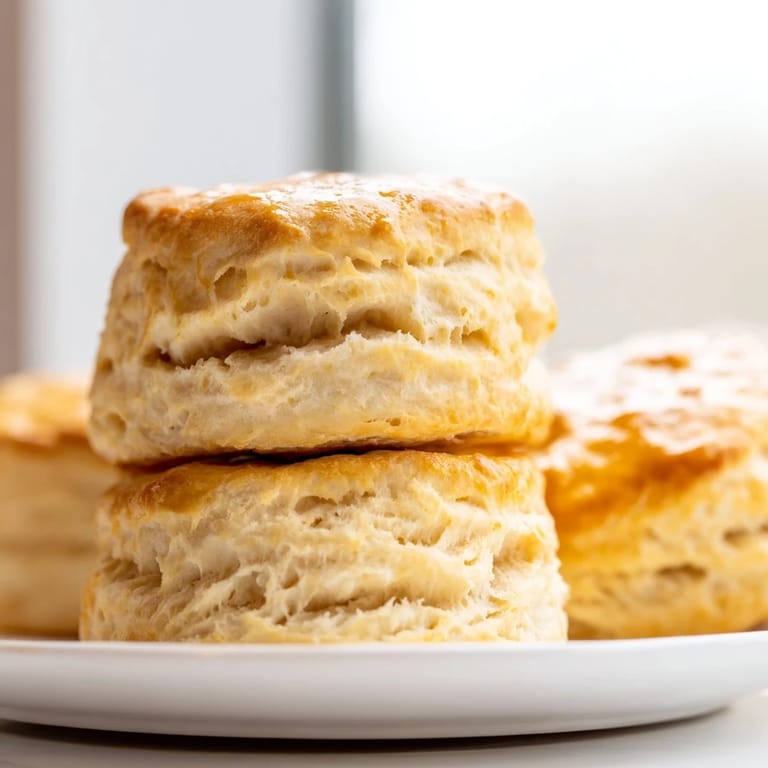
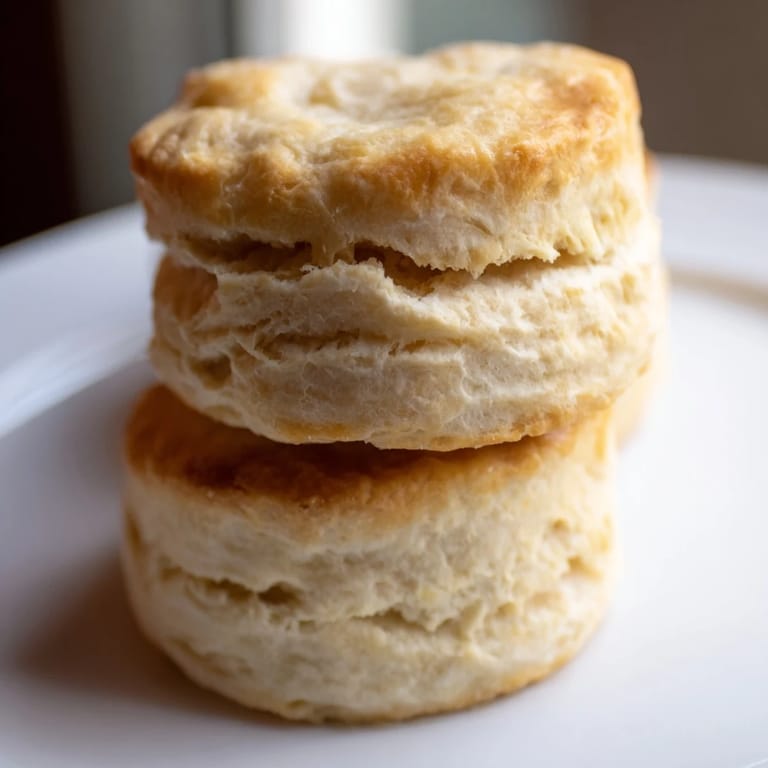
- 13 to 15 minutes until tall and deeply golden brown on top
- Wait a moment:
- Cool for just a few minutes before serving warm
 Save
Save These became my go-to when friends needed comfort, whether from heartbreak or homesickness or just a bad week at work. There's something about breaking open a warm biscuit that feels like an embrace.
Getting the Rise Right
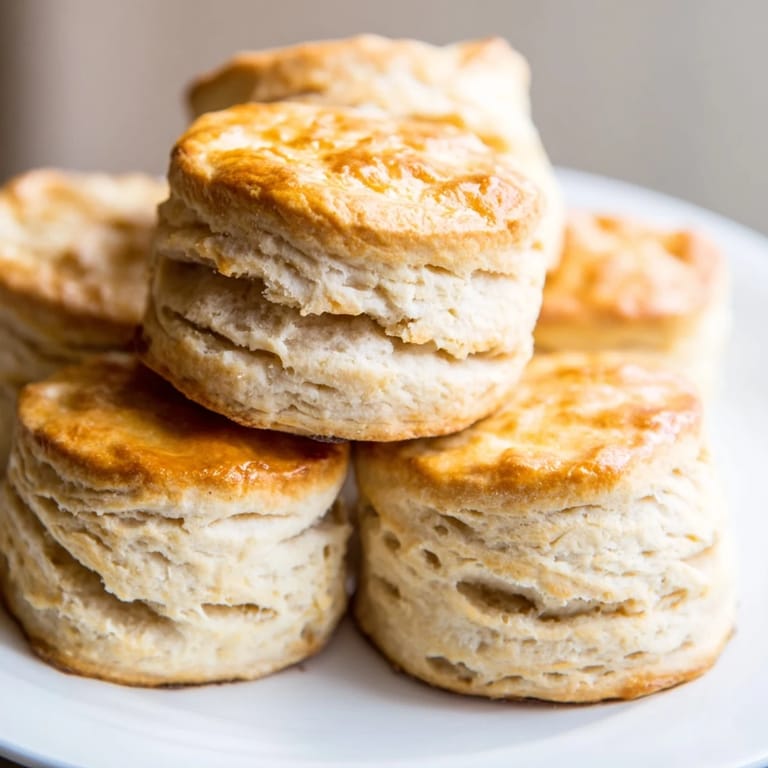
I've learned that placing biscuits close together on the baking sheet helps them rise taller because they support each other as they bake. When they're spaced apart, they tend to spread more than grow upward.
Butter Temperature Matters
Keep your butter in the freezer until the moment you need it, and work quickly once it's out. The tiny pockets of cold butter create steam as they melt, leaving behind those beautiful flaky layers we all want.
Serving Ideas
These biscuits are incredibly versatile and can anchor so many meals, from breakfast through dinner. The base recipe is perfect on its own, but add-ins can transform it completely.
- Split and toast them, then top with scrambled eggs and chives
- Use them as the base for strawberry shortcake in summer
- Serve alongside fried chicken with plenty of gravy
 Save
Save Whatever you do, eat at least one warm from the oven, plain as can be, just to appreciate what you've made.
Recipe Help & Answers
- → Why must the butter and buttermilk be cold?
Cold butter creates pockets of steam during baking, resulting in flaky layers. Warm butter melts into the flour before baking, preventing those signature tender layers from forming properly.
- → Can I substitute regular milk for buttermilk?
Yes. Combine ¾ cup milk with 2 teaspoons lemon juice or vinegar, let sit for 5 minutes until thickened, then use in place of buttermilk. The acidity activates the leavening agents for proper rise.
- → Why should I not twist the cutter when cutting biscuits?
Twisting seals the edges, preventing the biscuits from rising evenly and creating lopsided shapes. Press straight down and pull up cleanly to allow proper vertical expansion during baking.
- → How do I know when biscuits are done baking?
Look for deep golden brown tops and bottoms. The biscuits should feel light and spring back slightly when touched gently. They typically need 13-15 minutes at 220°C (425°F).
- → Can I freeze unbaked biscuits?
Cut the biscuits and place them on a baking sheet in the freezer until solid. Transfer to a freezer bag for up to 3 months. Bake from frozen, adding 2-3 minutes to the baking time.
- → What causes biscuits to be tough or dense?
Overmixing develops gluten, creating tough texture. Overworking the butter warms it, reducing flakiness. Mix gently until just combined and handle the dough as little as possible for best results.